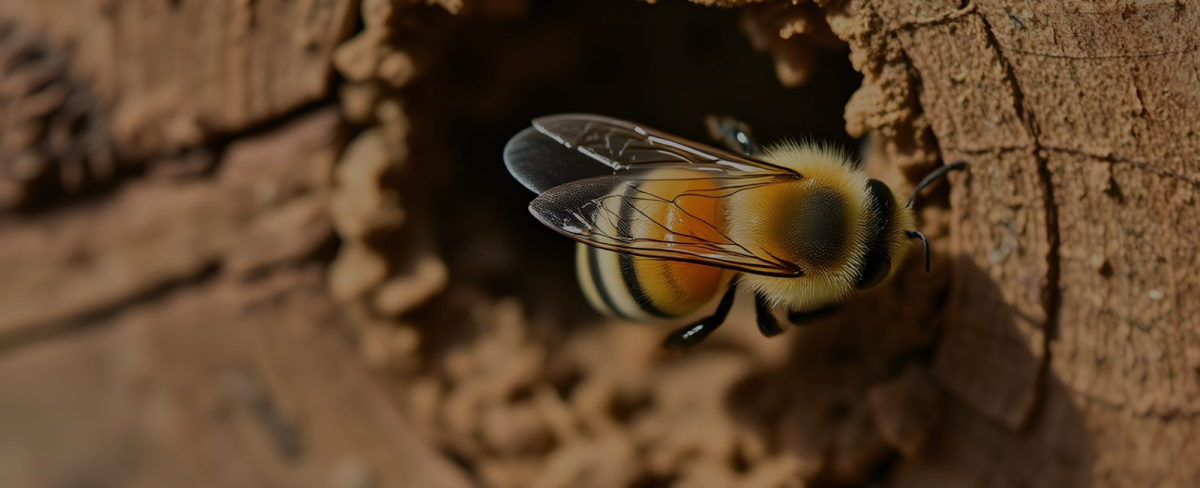
Carpenter Bee Treatment in Western North Carolina
Protecting mountain homes, cabins, and decks from costly wood damage, backed by a local, family-owned team.
- Best of Haywood County, 4 Years in a Row
- Family Owned & Operated
- NC Licensed #1801PW
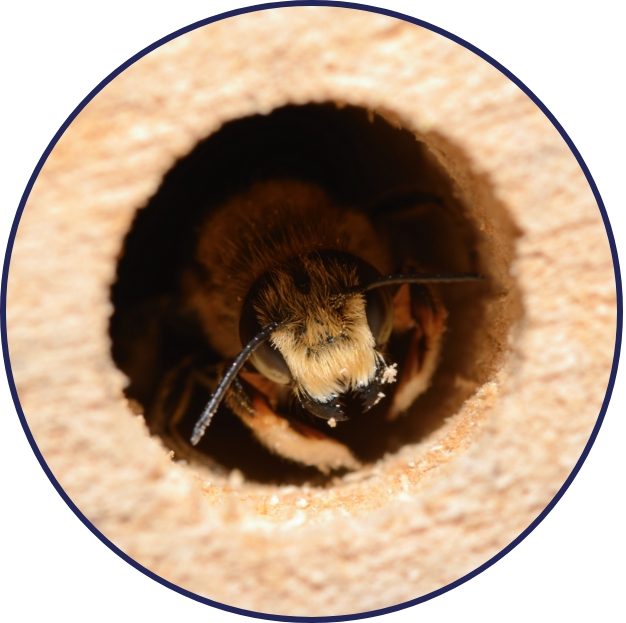
A Serious Threat to Homes in WNC
If you own a home, cabin, or deck in Western North Carolina, carpenter bees aren't just a nuisance. They're one of the most common sources of ongoing wood damage we see. Our region's wood-framed construction, cedar decks, log siding, and exposed mountain architecture create nearly perfect nesting conditions, and once carpenter bees establish a gallery in your wood, they return year after year.
At Stephenson Pest Control, carpenter bee treatment is one of our most-requested services every spring. We've protected homes across Haywood, Jackson, Buncombe, Henderson, Macon, and Swain counties, and we know exactly where these bees hide, how they spread, and how to stop the cycle.
Signs You Have a Carpenter Bee Problem
Carpenter bees are easy to spot once you know what to look for:
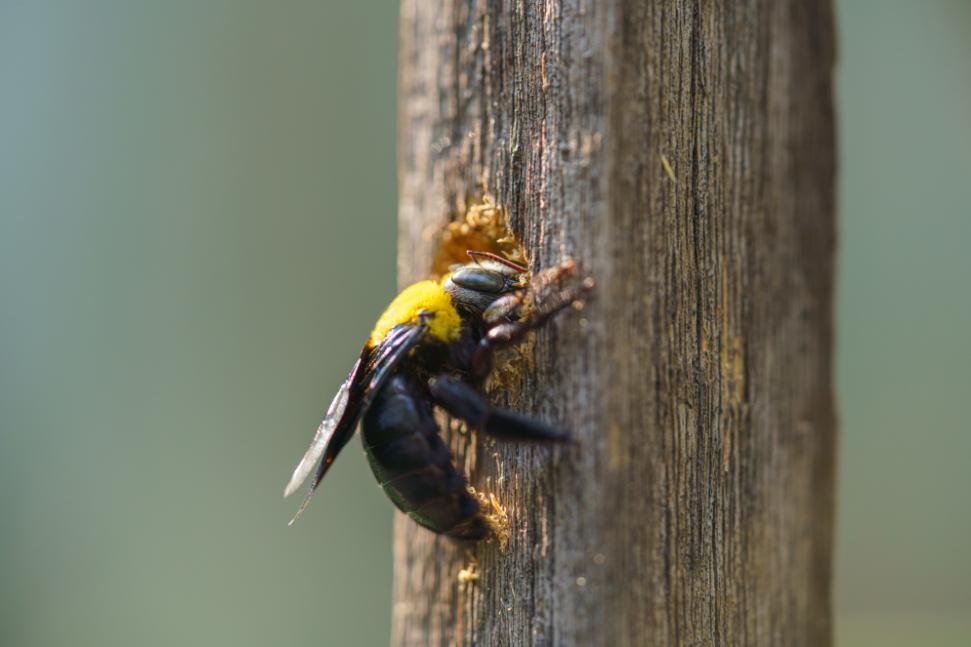
- Perfectly round, dime-sized holes drilled into wood surfaces
- Sawdust piles beneath eaves, railings, or deck boards
- Large black and yellow bees hovering near wood structures in spring
- Yellow or dark staining streaking down the wood beneath entry holes
- Woodpecker damage around existing holes, since woodpeckers dig out the larvae and make the damage far worse
If you're seeing any of these signs, the galleries inside your wood are likely larger than what's visible on the surface.
Why DIY Treatments Fall Short
Most homeowners try store-bought sprays or simply plug the holes with caulk. The problem? Filling a hole without treating the gallery traps live bees inside, who then chew a new exit, often creating more damage than before. Over-the-counter sprays rarely reach deep enough into the tunnels to eliminate the larvae, which means next spring the cycle starts over.
Carpenter bees also tend to reuse and expand existing galleries year after year. What starts as a single hole can turn into a network of tunnels running several feet through a rafter or deck beam, and that's when structural damage becomes expensive.
Our Carpenter Bee Treatment Process
We take a straightforward, effective approach built around our Western North Carolina customers:
1
Inspection
We start with a free, thorough inspection of your home, deck, outbuildings, and any other wood structures where carpenter bees are active. We identify active galleries, assess damage, and map out the treatment plan.
2
Targeted Treatment
We apply professional-grade treatments directly to active nesting sites, entry points, and the exposed wood surfaces carpenter bees are most likely to target. Our approach reaches deeper into the galleries than consumer products can, eliminating larvae and preventing emergence.
3
Prevention and Follow-Up
Because carpenter bees return to the same areas year after year, we provide recommendations for sealing treated galleries and protecting vulnerable wood long-term. For customers on our annual carpenter bee program, we build seasonal carpenter bee treatment right into the schedule.
Common Areas We Treat
Carpenter bees target unpainted, weathered, or softer woods. We most commonly treat:
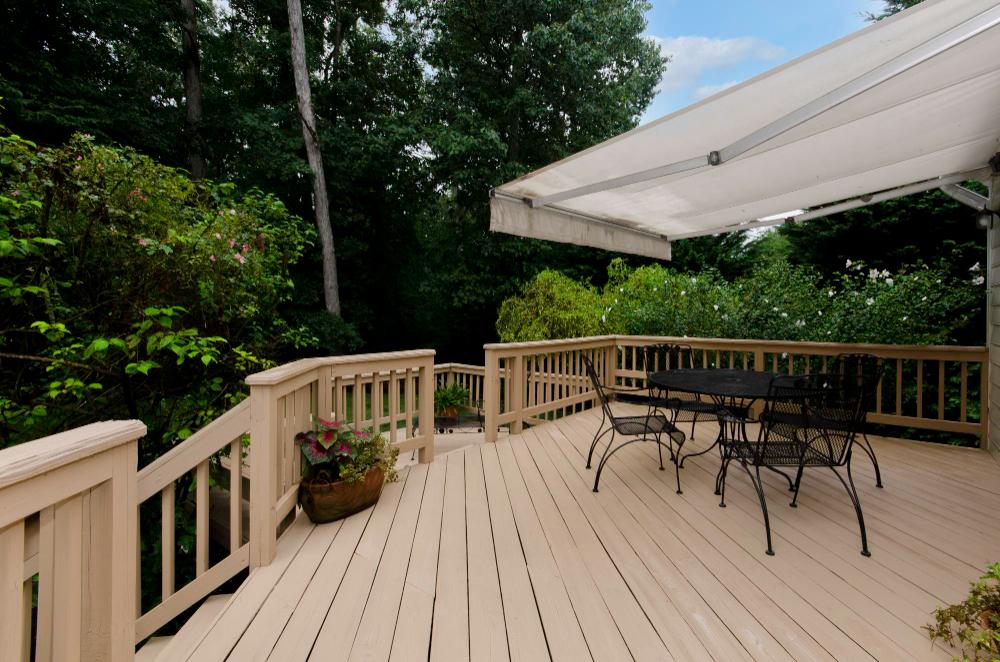
- Decks, railings, and deck support posts
- Eaves, fascia boards, and soffits
- Log siding and log home exteriors
- Pergolas, gazebos, and outdoor structures
- Sheds, barns, and outbuildings
- Wooden play sets and swing sets
- Cabin exteriors and vacation rental properties
Why Stephenson Pest Control

Over 35 Years of Pest Control Experience
Owner Mark Stephenson was professionally trained in pest control before founding a local, family-run company.

Best of Haywood County
voted by the community four years in a row

Locally Owned and Operated
So you'll know who's coming to your home

NC Licensed and Insured
Structural Pest Control License #1801PW

Active Members
North Carolina Pest Management Association (NCPMA) and National Pest Management Association (NPMA)
Had carpenter bees, bad. Called Stephenson, they sprayed the entire house and attached garage. 2 months later I noticed some activity. I called Stephenson back, they came back in a couple days and resprayed. No charge! End of problem. Thank you, Stephenson.
David K., Google Review
The Smarter Long-Term Solution: Annual Protection
A one-time carpenter bee treatment handles the immediate problem. But because these bees are seasonal and return to the same wood year after year, many of our customers choose our annual carpenter bee program for ongoing protection. Annual service includes scheduled carpenter bee treatment targeted early in their peak season.
Frequently Asked Questions
When is the best time to treat for carpenter bees?
Early spring, typically late March through May in Western North Carolina, is the ideal window. That's when carpenter bees emerge from their overwintering galleries and begin drilling new holes or expanding old ones. Treating early in the season stops the reproductive cycle before larvae mature. That said, treatment can be effective throughout the warmer months, so don't wait if you're already seeing activity.
Will carpenter bees come back after treatment?
Carpenter bees are strongly site-loyal, and new bees can be attracted to previously used galleries. A single treatment significantly reduces the population, but because carpenter bee pressure in our region is so high, most homeowners benefit from annual treatment to keep them from reestablishing.
Are your treatments safe for kids and pets?
Yes. All of our treatments are applied according to strict label guidelines and industry safety standards. We focus applications on the nesting zones and exposed wood areas where carpenter bees are active, and we're always happy to walk you through exactly what we're using and any re-entry guidance.
Can I just fill in the holes myself?
Filling holes without treating them first is one of the most common mistakes we see. It traps live bees inside, which causes them to chew new exits and often creates more damage. Effective treatment requires reaching into the gallery itself. Once treatment is complete, sealing the holes is an important step in preventing future reuse.
Do you treat stained or painted wood differently than bare wood?
Carpenter bees strongly prefer unpainted, weathered, or softer woods, so painted and well-sealed surfaces are naturally less attractive to them. Our technicians adjust application based on the wood type, condition, and level of activity. If you have a mix of painted and bare wood on your property (which is typical on decks and cabins), we'll treat each area appropriately.
Protect Your Home Before the Damage Spreads
Carpenter bee damage only gets worse, and more expensive, the longer it's ignored. Let's take care of it now.